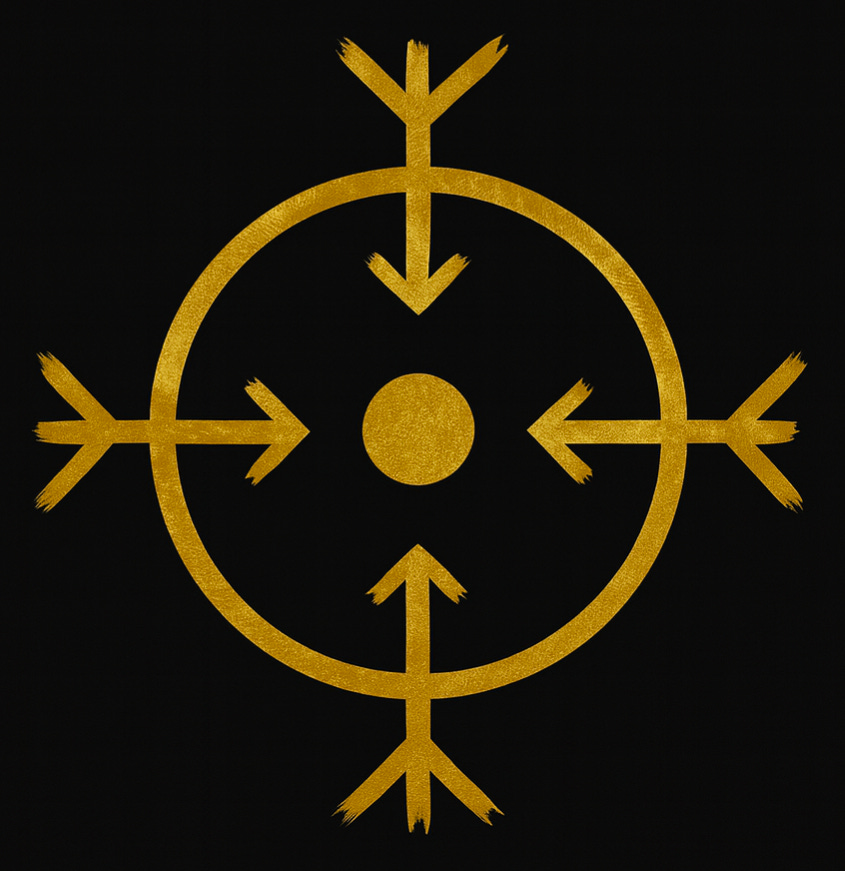
On Readiness, Alignment, and preparing for the perfect shot
By: Logan Jensen, General Partner of the Golden Path
There’s an old story about Robin Hood entering an archery contest. His companions warned him it was a trap—the Sheriff would be watching, and winning would expose him. Robin entered anyway.
His opponent shot first and hit the bullseye. A perfect shot. The crowd assumed the contest was over.
Robin drew his bow and loosed his arrow. It flew true, struck the first arrow dead center, split it down the shaft, and lodged itself in the heart of the target. He won the contest and took home the golden arrow.
Most retellings treat this as spectacle—a display of impossible skill under pressure. But the detail worth noticing is that Robin took the shot because he could make it. Not bravado, but readiness. He understood the distance, the wind, the weight of the arrow, his own capacity. The conditions had been prepared such that the shot was possible.
Introduction
We are building a framework around this image.
The Golden Target represents civilizational flourishing—a state where institutions, narratives, and individual actions pull in roughly compatible directions often enough to amplify rather than cancel each other out. It’s not a blueprint or a utopian endpoint. It’s more like magnetic north: you navigate toward it, but you never arrive, and its exact position shifts depending on where you stand and what you’re carrying with you.
The target already has an arrow in it. Our current systems—markets, governments, cultures, technologies—have hit something. They function, often disturbingly well, according to their internal logic. The problem isn’t that they’ve missed entirely. It’s that they’re lodged somewhere in the outer rings, far from the center we’d hope for, and billions of lives depend on them not being knocked loose carelessly.
So the question becomes whether it’s possible to hit closer to the center without destroying what’s already there. And more precisely: how do we know when we’re ready to try?
The Golden Target framework is a diagnostic for answering that question. It tracks three variables:
Proximity: How well do we understand the systems we’re trying to change? Understanding is what closes distance. When you grasp something deeply—its feedback loops, failure modes, emergent properties—you’re effectively standing right in front of it. You can see the grain of the wood, feel the wind on your cheek, make fine adjustments. When you’re guessing, you might as well be shooting blind from across a field in a storm.
Target size: How much resilience have we built in? How large is the zone of acceptable oscillation around the center? No living system is ever perfectly stable—coherence is always dynamic, always breathing. A bigger target means more margin for error, more room for the natural turbulence of human societies without fracturing into something worse.
Arrow quality: How developed are the programs actually doing the work? If the arrows are poorly made or aimed in conflicting directions, standing close won’t save you.
The Four Arrows
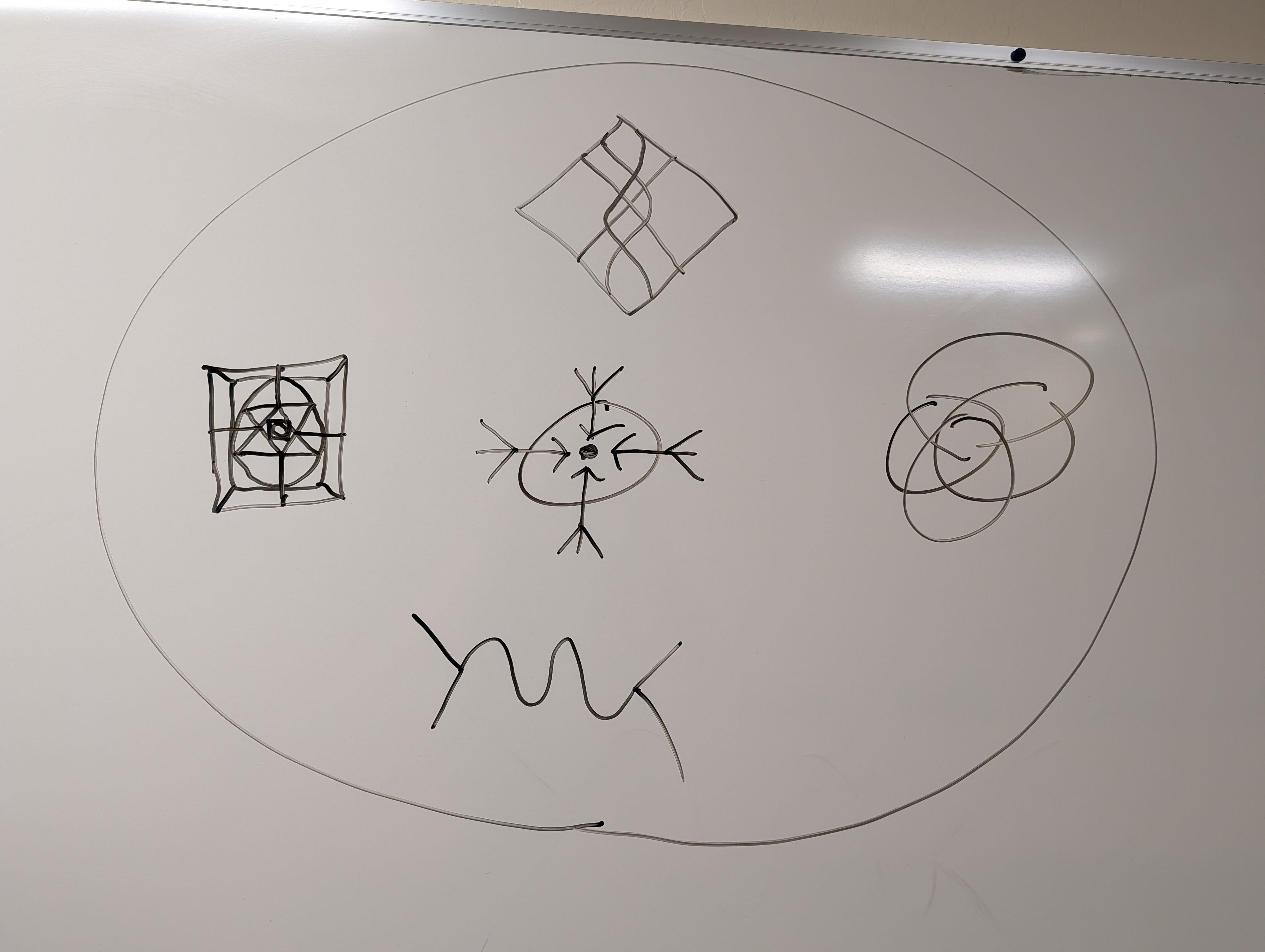
Four programs orient the framework, each addressing a different layer of the problem of alignment. You might say that they are our 4 shots at hitting the bullseye, but in practice they are the arrows that signal the crosshair to set our aim properly. For now they are still being crafted and they will sit in the quiver for a long time before ever being used, but if they fly true they will play an important role in taking our instantiation of the shot heard round the world.
The Golden Path
The Golden Path functions like an intelligence agency whose client is civilization itself and whose adversary is civilizational failure.
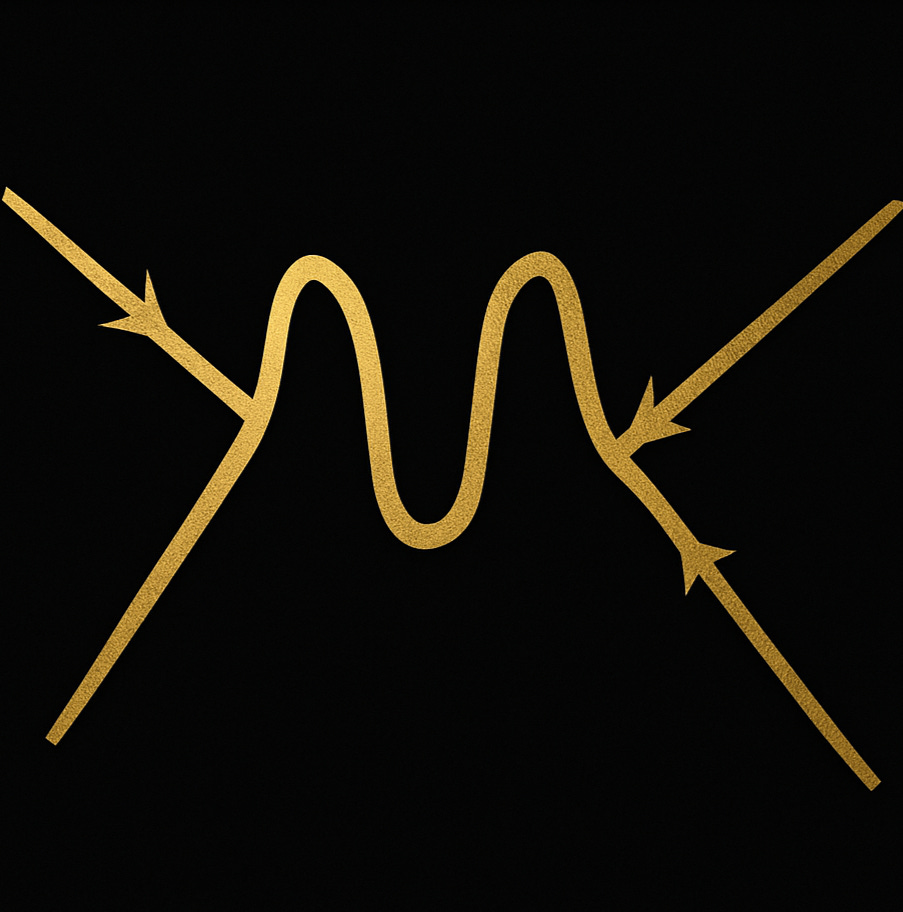
In practice, this means the slow and unglamorous work of scenario planning, wargaming, mapping attractor states, and monitoring where we actually sit on the adaptive landscape at any given moment. Think of it as a GPS system that tracks our collective position relative to the peaks we want to reach and the valleys we want to avoid—one that continuously recalculates the route as conditions shift beneath our feet.

Traditional intelligence work assumes an enemy out there, some adversarial nation or organization whose intentions must be divined and countered. The Golden Path has a different orientation: the enemy is the set of failure states that complex civilizations can stumble into, often without anyone intending it, often without anyone noticing until it’s too late. The work is understanding which futures we might be drifting toward, which attractors are pulling at us beneath the surface of daily events, and what the terrain looks like between here and the various places we might end up.
This isn’t prophecy, and it isn’t central planning. It’s disciplined foresight—acknowledging that deep uncertainty is irreducible while refusing to wander blindly through it. The destination never arrives in the sense that you reach it and stop; magnetic north keeps shifting as you move, as the world moves, as the meaning of flourishing itself evolves. But it remains genuinely useful for navigation. You don’t need to reach the pole to benefit from knowing which direction it lies.
The Golden Kingdom
Human behavior is shaped by forces that aren’t quite ideas and aren’t quite institutions—call them psychofauna. They’re the complex meta-processes that emerge when people coordinate at scale: ideologies, movements, memes, religions, market dynamics, social contagions, the strange creatures that live in the space between individual minds. They evolve, compete, cooperate, mutate, go extinct, and sometimes return in new forms. Some lead people to act in ways aligned with their own flourishing and the flourishing of others. Some create perverse incentives that benefit individuals while degrading the collective—extracting value from the commons, generating externalities that no one chose but everyone suffers.
You can frame these forces as angels and demons if that’s the tradition you come from, or as egregores if you prefer the occult vocabulary, or as emergent coordination patterns if you want something more sterile. The framing matters less than the recognition that they’re real, they’re powerful, and they’re poorly understood. Most institutions are shaped by psychofauna they’ve never named and can’t see clearly, which means they’re being influenced by forces they can’t consciously navigate.

The Golden Kingdom is the program for understanding these creatures. Part of the work is taxonomy: mapping what’s out there, cataloging behavior patterns, understanding what conditions different psychofauna thrive in and what starves them. Part of it is something closer to domestication—learning which of these forces can be cultivated for useful work within human institutions, which ones need to be contained or quarantined, which ones should simply be left alone in their wild state because the attempt to harness them would cause more harm than good.
Think of the people doing this work as park rangers and naturalists for the ecology of ideas. They study the wildlife in its native habitat, they guide others through the territory and help them recognize what they’re encountering, and they assist organizations in working with these forces deliberately rather than being captured by them unknowingly. The goal isn’t control—you can’t control an ecosystem, not really—but something more like informed stewardship, the kind of relationship a skilled forester has with a forest they’ve come to know over decades.
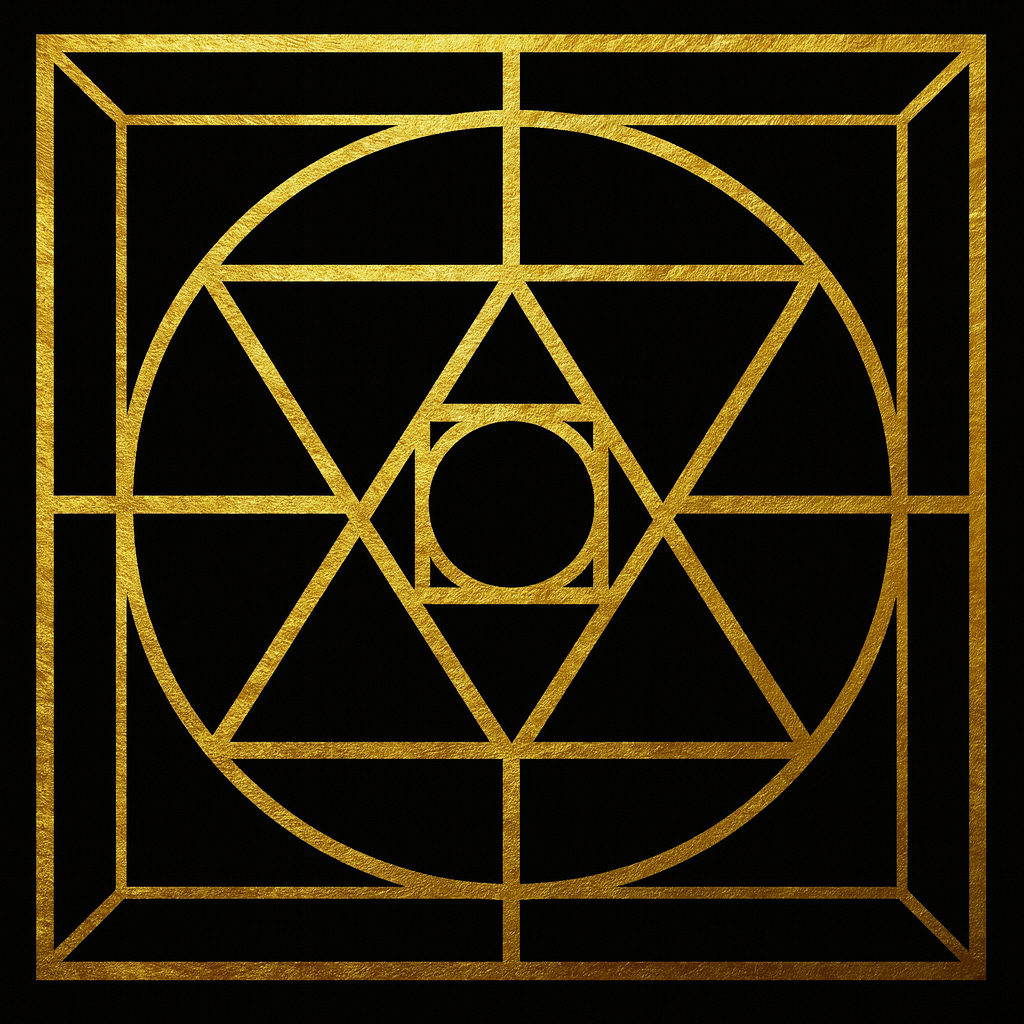
The Golden Court
The Golden Court cultivates people capable of navigating this landscape—what you might call knights, in the older sense of the word: individuals with a strong personal code, a domain they serve rather than dominate, and the capacity to protect that domain from harmful psychofauna while working productively with beneficial ones.
This draws from wisdom traditions across cultures, religious and secular both, but it’s not simply virtue ethics repackaged or another leadership development program. The cultivation is specifically oriented toward the problem of operating within complex adaptive systems where outcomes are nonlinear, where good intentions routinely produce bad results, and where the forces shaping behavior are often invisible to the people being shaped. The goal is developing people whose internal structure is robust enough that they require minimal external supervision—not because they’re saints, but because their incentives and understanding have been aligned well enough that doing the right thing feels natural rather than costly.
These knights are trained to recognize psychofauna when they encounter them, to avoid being captured by the parasitic ones that would use them for purposes they never endorsed, to cultivate the symbiotic ones that genuinely serve the domains they’re responsible for, and to help others develop the same capacities. They operate as servant-leaders, which is a term that’s been diluted by overuse but still points at something real: authority exercised for the benefit of those under it rather than extracted from them. The domain doesn’t exist for the knight; the knight exists for the domain.
The distinguishing feature is that this isn’t about producing better individuals in isolation. It’s about producing people who can function as reliable components in a larger system of alignment—whose judgment can be trusted to operate on qualitative information and genuine ambiguity, and who understand their own position within the bigger picture well enough to act coherently even without constant coordination.
The Golden Crusade
The Golden Crusade is the most immediate of the four programs, the one closest to the ground. It answers the question everyone eventually asks: what do I actually do?
The method starts with orientation—understanding the big picture of where we’re trying to go, then understanding the intermediate layers between that distant destination and your immediate situation. What are the structures between here and there? What are the leverage points, the constraints, the channels through which influence actually flows? Once you can see the topology, you look for the smallest action available to you that moves things slightly toward better alignment. Then you take that action. Then you do it again, recalibrating as you go.
This sounds like ordinary do-gooderism, and there’s genuine overlap—the Crusade isn’t dismissive of simple acts of kindness or local charity. But ordinary do-gooderism typically addresses simple or merely complicated problems, the kind where you can see the mechanism clearly and apply force in an obvious direction. The Crusade is built for complex problems—the kind that resist direct intervention, the kind that can only be shifted through the accumulation of countless small nudges distributed across many people acting over long timeframes.
It also differs from effective altruism, though again there’s overlap worth acknowledging. EA operates in a utilitarian frame and relies heavily on quantitative methods—calculating expected value, measuring outcomes, optimizing the allocation of resources toward whatever produces the most good per dollar. The Crusade operates more in a virtue ethics frame, which means the emphasis is different: cultivate people with the right understanding and perspective and capacity for discernment, then trust their intuitive judgment about what to do next. The quantitative tools are useful and shouldn’t be abandoned; they help build intuition, they catch certain kinds of errors, they ground the work in something more than vibes. But the primary mode is qualitative—induction over deduction, pattern recognition over calculation, wisdom over optimization.
The hope is that as more people engage in this kind of oriented action, their individual nudges begin to cohere, not through central coordination but through shared understanding of the target they’re aiming at. A thousand archers all shooting toward the same distant point will, over time, fill the target with arrows—even if no single shot is decisive and no single archer can see what the others are doing.
Thanks for reading! Subscribe for free to receive new posts and support my work.
Remembering the Tortoise and the Hare
Here’s the paradox built into the heart of the framework.
The full Golden Target system—the capacity to take the shot that splits the arrow and claims the center—requires extensive validation before activation. Every component must be tested in conditions that actually matter. The intelligence must be verified against reality. The arrows must be proven to fly true. The target must be large enough, and our understanding deep enough, that missing doesn’t destroy what’s already there. This takes time, potentially a great deal of time. It’s the tortoise, slow and methodical, refusing to rush.
But validation requires live testing. You can’t prove the components work without running them in real conditions, against real psychofauna, within real institutions full of real people whose lives are affected by the outcome. Which means that as the top-down system prepares itself for the eventual shot, its pieces are already being deployed bottom-up into the world. The Path is already generating useful foresight for anyone who cares to look. The Kingdom is already mapping psychofauna that institutions can use to navigate their environments more skillfully. The Court is already cultivating people with the capacity to act wisely under uncertainty. The Crusade is already making its nudges, millions of small adjustments to the trajectory of things.
So there’s a race condition between how fast bottom-up deployment can improve things incrementally and how fast top-down validation can prepare the full shot. But the race is rigged from the start—rigged in a way that’s intentional, that’s actually the point. The tortoise has a structural advantage. By the time the top-down system is ready to fire, the bottom-up work will have been running for years, quietly filling the target with arrows, reducing fragility everywhere it touches, closing the distance between where we stand and what we’re aiming at. The patient, careful preparation is the distributed improvement.
You can think of this as a Ship of Theseus situation. As you validate each component of the framework, you’re replacing pieces of the existing system with better-aligned versions. A plank here, a beam there. Eventually the shot that would transform the whole ship becomes less necessary because the ship has already been transformed, piece by piece, while you were preparing to transform it. The framework is, in a certain sense, an elaborate do-nothing box operating at civilizational scale—a mechanism whose purpose is to prepare an intervention that its own patient operation renders increasingly unnecessary.
Break Glass in Case of Emergency
The framework exists right now in embryonic form. It’s being cultivated deliberately outside of formal power structures—not out of cynicism or withdrawal from the world, but from recognition that ideas of this nature tend to deform when institutionalized before they’ve developed sufficient internal coherence. Rush an embryo and you get something malformed. The work at this stage is patience, careful cultivation, letting the thing develop according to its own logic.
The commitment is this: the full shot will not be taken—the framework will not be activated at scale—until it is requested by those whose lives depend on its success. In practice, that means building legitimacy from the ground up, one conversation and one demonstration and one small proof of value at a time, until there’s genuine collective consent to try something larger. This might sound impossibly ambitious, a standard that can never be met. Perhaps. But the alternative—taking the shot without that legitimacy, forcing a transformation that people haven’t chosen—would violate the very principles the framework is meant to embody.
This might never happen. The embryo might never hatch, the shot might never be taken, the full system might remain forever in preparation. That’s acceptable, genuinely acceptable, because the nudges will have mattered anyway. The understanding will have deepened. The arrows will have been shaped with care. Someone else, standing in a different place at a different time, might pick them up and find them useful for purposes we can’t anticipate.
But the full activation exists as a contingency—a break-glass-in-case-of-emergency option that remains available even if we hope it’s never needed. In a sufficiently acute crisis—a collapse of institutional legitimacy, a convergence of emergencies requiring total mobilization—the shot could be taken earlier than planned. Think Manhattan Project rather than normal policy development. Think the kind of moment when ordinary caution becomes its own form of recklessness.
If the framework is working correctly, though, such a crisis shouldn’t arise. The bottom-up improvement will have been running the whole time, quietly strengthening what needed strengthening, filling the target with arrows closer to the center, building resilience against exactly the kind of shocks that would otherwise demand emergency action. The emergency option exists precisely so it doesn’t need to be used.
The golden arrow is won by readiness, not recklessness. The work right now is standing closer to the target, shaping arrows that fly true, building the understanding that closes distance—while hoping, genuinely hoping, that the shot becomes unnecessary before we ever have to take it.
 The Golden Target